


Create your nutrition list
To start, click the button. Follow the prompts, and create your nutrition list.
It’s your choice - with our knowledge.
It’s your choice - with our knowledge.
Subscribe to  for FREE priority shipping | Learn more


Popular Brands
Popular Products
Popular Hydration Brands
Popular Recovery Brands
Popular Health Brands
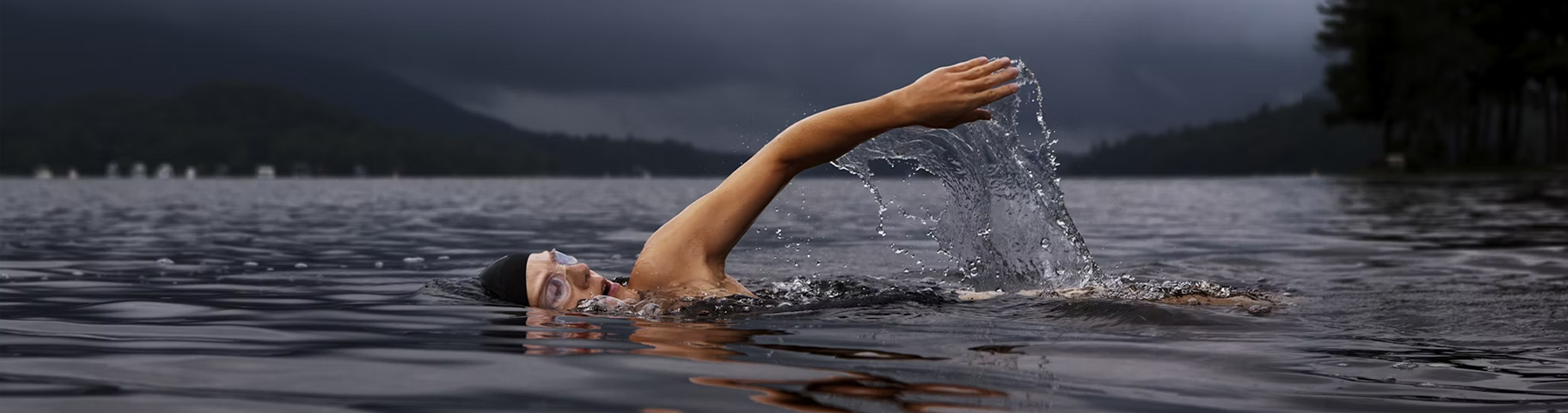
Open water swimming is becoming increasingly popular, and for good reason. Open water, or cold-water swimming as it is sometimes know, can have incredible health benefits both physical and mental.
Whether you’re thinking about taking the plunge or just curious, we’re going to look at what exactly open water swimming is, and how it could benefit you.
Open water takes place in outdoor bodies of water- the ocean, rivers, and lakes.
Some people take part in the activity purely recreationally but there are also some open water swimming races and events, such as the Serpentine Swim in Hyde Park and the Great North Swim in Windemere.
The swim portion in a Triathlon often takes place in open water.
Swimming in open water comes with a whole new set of challenges that you’re unlikely to face in a pool. Mainly thanks to the unpredictability of nature, open water swimmers must be adaptable and stay alert at all times.
Weather conditions.
Wind & waves can make open water swimming challenging and can be unpredictable.
Currents.
Battling against a current can make swimming in open water more physically demanding.
Water Temperature.
You may need to wear a wetsuit during the colder months.
Swimming straight.
In a pool swimming in a straight line is easy. In open water there are no lanes, instead you must find your bearings using points of reference in the landscape. This technique is known as spotting and helps open water swimmers stay headed in the right direction.
Open water swimming has many benefits, both physical and mental. Here are some of the reasons we think you should consider taking a cold dip.
Being in the cold water stimulates the parasympathetic nervous system (PNS) which promotes feelings of relaxation and can help you get a better nights sleep.
Swimming in cold water forces your body to work harder to stay warm. In turn this causes increased calorie burn.
According to science, being in cold water for an hour can shock the immune system into producing more white blood cells and antioxidants. This helps to boost the immune system and reduce the risk of heart disease and cancer.
Cold water swimming promotes the release of endorphins dopamine and serotonin which make us feel happy.
Cold water swimming and spending time in nature are also proven to reduce stress and anxiety.
Cold water immersion is known to stimulate blood flow, thus improving circulation.
Cold water swimming can reduce muscle and joint pain by reducing swelling and inflammation and is used by many people with chronic pain to alleviate symptoms.