



Create your nutrition list
To start, click the button. Follow the prompts, and create your nutrition list.
It’s your choice - with our knowledge.
It’s your choice - with our knowledge.


Popular Brands
Popular Products
Popular Hydration Brands
Popular Recovery Brands
Popular Health Brands

Cycling events demand more than strong legs and solid training. Whether you are lining up for a sportive, tackling a gran fondo, or heading out for a multi hour club ride, fuelling properly is what keeps power consistent and the dreaded energy dip at bay.
Energy bars still play a crucial role in a cyclist’s nutrition plan. They offer a practical, portable way to top up carbohydrates, especially during lower intensity phases of a ride or in the early hours of longer events. The key is choosing bars that deliver the right balance of carbs, digestibility, and convenience for riding at speed.
Gels and drink mixes often dominate race day talk, but bars provide something different.
On longer rides, particularly those over 3 hours, real food texture can help combat flavour fatigue. Chewing also slows intake slightly, which can be useful during steady endurance efforts where you want a more gradual carbohydrate delivery.
Energy bars are particularly useful:
For most cyclists, aiming for 60 to 90 grams of carbohydrate per hour is a solid benchmark. The exact number depends on bodyweight, intensity, and event duration, which is where our Nutrition Calculator becomes invaluable for dialling in your personal targets.
Not all bars are created equal. When choosing one for an event, consider:
Carbohydrate content: For race situations, you generally want a bar with a meaningful carb contribution. Something around 30 to 50 grams per bar works well, depending on how you combine it with gels and drinks.
Texture and chewability: It needs to be easy to eat on the move. A bar that is too dense or crumbly can be frustrating when riding in a group or descending.
Digestibility: High fibre or high fat bars may work in training but can be risky at race intensity. Look for bars designed specifically for endurance performance.
Portability: Slim, easy to unwrap packaging that fits in a jersey pocket is ideal.
Here are some great bars for your cycling event:
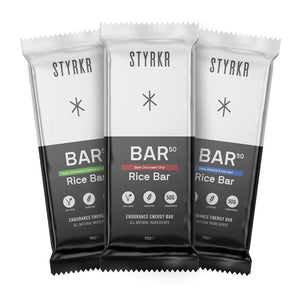
Each BAR50 delivers 50 grams of carbohydrate and over 250 calories, making it one of the higher energy options available. That makes it particularly useful during long sportives, endurance races, or heavy training blocks where total energy demand is high.
For cyclists aiming for higher carb intakes, such as 80 to 100 grams per hour when combined with drink mix, BAR50 can form the backbone of a robust fuelling strategy.
226ERS Race Day BCAA Vegan Energy Bar
The Race Day BCAA Vegan Energy Bar from 226ERS takes a slightly different approach, combining carbohydrates with added BCAAs in a compact, race focused format. Designed to be lighter and easier to digest than traditional dense bars, it is well suited to race pace efforts where gut comfort is a priority.
The carbohydrate profile supports sustained energy release, while the inclusion of BCAAs makes it an appealing option for longer or more demanding events where muscle breakdown becomes a factor.
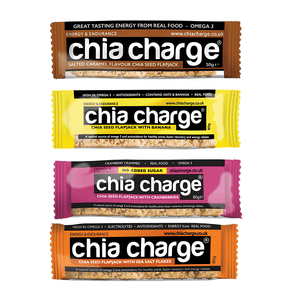
Chia Charge Chia Energy Flapjack
For cyclists who prefer a more traditional, real food feel, the Chia Energy Flapjack from Chia Charge offers a balanced and satisfying option. Built around oats and chia seeds, this flapjack provides a mix of carbohydrates alongside natural ingredients that many riders appreciate during long days in the saddle.
It works particularly well in the early stages of a ride or during training sessions where intensity is slightly lower and you can comfortably chew and digest more substantial fuel.
Are energy bars better than gels for cycling events?
Neither is better, they serve different purposes. Bars are ideal for steady efforts and early race fuelling, while gels are often easier during high intensity sections.
How many energy bars should I take on a 100 km ride?
This depends on your carbohydrate target per hour. For many riders, one bar per hour combined with drink mix works well, but individual needs vary.
Can I rely only on energy bars for a long sportive?
You can, but most cyclists benefit from combining bars, gels, and carbohydrate drinks to reduce flavour fatigue and improve digestion over longer distances.
Energy bars remain a valuable tool for cyclists, especially in longer events where variety, texture, and sustained energy matter.
As always, the right choice depends on your event, your intensity, and your gut tolerance.