


Create your nutrition list
To start, click the button. Follow the prompts, and create your nutrition list.
It’s your choice - with our knowledge.
It’s your choice - with our knowledge.


Popular Brands
Popular Products
Popular Hydration Brands
Popular Recovery Brands
Popular Health Brands

Product Insights
Discover more about the products in this article
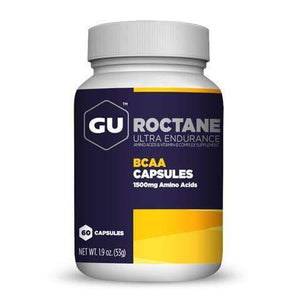
Roctane BCAA Capsules
Featured Products
 You may have heard a thing or two about them from your supplement-savvy training partner, but unless you have a background in biochemistry, you might not know why they matter or how to incorporate them into your training and nutrition regimen.
Leucine, isoleucine, and valine are the three branched chain amino acids (BCAAs), so named because of their nonlinear (“branched”) carbon atom configuration. Amino acids are the building blocks of proteins, and proteins, as you probably know, make up the structure of the body. Amino acids are either produced in the body (termed, “nonessential”), or they must be supplied from the diet (termed, “essential”).
BCAAs are essential amino acids, meaning they are not made in the body, yet they constitute more than one third of the protein found in human muscle tissue! Rich dietary sources of BCAAs include dairy, egg, meat, poultry and fish. Supplemental BCAAs are also widely available and often used within the context of sports nutrition. BCAAs are unique because, unlike most other amino acids, they are primarily metabolized within the muscle itself, as opposed to being broken down by the liver. That has two important implications for performance:
Of the BCAAs, leucine in particular has been shown to initiate muscle protein synthesis (building) and inhibit protein breakdown (Norton & Layman, 2006). This is key whether you are trying to build muscle, maintain lean body mass during caloric restriction, or simply reduce muscle breakdown during intense and/or long-duration exercise.
BCAAs have been found to inhibit the onset of both central and peripheral fatigue during exercise, so you can go stronger for longer. Peripheral fatigue (when your muscles get tired) is delayed because BCAAs are used as an additional energy source during prolonged exercise. Event after your body has used its glycogen stores, you can pull power from BCAAs in your muscles(Kainulainen, Hulmi, & Kujala, 2013; Gualano et al., 2011). Central fatigue (when your brain gets tired) may also be delayed by BCAAs that block the amino acid tryptophan from getting into the brain. Tryptophan (the same tryptophan from your post-thanksgiving drowsiness) is a precursor to the neurotransmitter serotonin, a central fatigue substance which produces feelings of relaxation and sleepiness (Newsholme & Blomstrand, 2006).
Trained cyclists supplementing with 6 g BCAAs for a week leading up to a graded exercise test to exhaustion achieved a 4% higher VO2max, including 13% higher VO2 at the lactate threshold (LT) and 6% greater power output at LT compared to placebo (Matsumoto et al, 2009). As any athlete knows, a a small increase in performance can mean the difference between a podium finish…or not. In another study involving trained cyclists, researchers found that 10 weeks of BCAA supplementation (12 g/day) resulted in a 19% increase in all-out sprint peak power and 4% increase in average power relative to body mass when compared to placebo (Kephart et al., 2016). Importantly, the results of these studies indicate that BCAA supplementation can improve both aerobic exercise capacity and anaerobic performance!
Intense, high volume training repeated over days and weeks can lead to fatigue, immune suppression, and overtraining if an athlete does not recover adequately between training bouts. Chronic (long term) supplementation with 12 g BCAA daily has been shown to improve the immune response to several weeks of intense endurance training in cyclists (Kephart et al., 2016). But how? Researchers have found that BCAAs can also be used by immune cells within the gut as a fuel source, which allows the immune system to regenerate itself more efficiently and protect against harmful pathogens (Zhang et al, 2017). A strong immune system aids in recovery and makes you less likely to get sick.
BCAAs have been shown to preserve muscle mass under extremely catabolic conditions characterized by protein breakdown and muscle wasting, such as ultramarathons and high altitude mountaineering (Schena, Guerrini, Tregnaghi, & Kayser, 1992). During exercise, muscle protein breakdown, and in particular, BCAA breakdown for energy is increased (Shimomura et al., 2004). By providing supplemental BCAAs, the body is less likely to consume its own amino acid (protein) stores. Think of them as your muscle insurance policy!
This is probably the number 1 reason weight lifters love BCAAs! As mentioned before, leucine is the most important of the three BCAAs for initiating muscle protein synthesis (MPS), which is necessary for muscle building. A dose of 2-3 g leucine (depending on body weight) is generally considered effective to maximally stimulate MPS, and is often referred to as the leucine threshold (Norton & Layman, 2006). As a point of reference, one large egg contains about 0.5 g leucine, and 5-6 oz of most meat, poultry, or fish sources will provide the recommended 2-3 g amount. Dairy products, and whey in particular, are high in BCAA content, which is why you’ll find whey protein in recovery drinks.
BCAA administration prior to and following exercise may reduce the severity and duration of delayed onset muscle soreness (DOMS), the painful sensation that lasts for several days after an intense or unaccustomed exercise bout (Shimomura et al., 2010). Furthermore, studies have shown that BCAA intake reduces muscle damage in response to both resistance training (Howatson et al., 2012) and endurance exercise (Coombes & McNaughton, 2000; Kim et al., 2013). That means you can bounce back faster and have less muscle soreness between challenging workouts.
The exact dosage and ratio of leucine:isoleucine:valine is still a matter of debate in the literature, but most studies supplemented within a range of 4-20 g BCAAs per day, usually split into multiple doses.
Favourable results have been seen with prolonged use, as it appears that the enzyme activity necessary to break down BCAAs increases in response to habitual intake. Many studies have observed benefits after a week or more of daily supplementation.
BCAAs can be taken before, during, and after workouts to rapidly increase amino acid levels in the bloodstream, promote protein synthesis, and prevent muscle protein breakdown. They may also be taken between meals if you feel your diet is not providing adequate levels of BCAAs in the form of complete protein from meat, dairy, fish, eggs, etc. Supplemental BCAAs are sold encapsulated (like the GU Roctane BCAA Capsules), or in plain or flavored powder form, that can be mixed into liquid. Keep in mind, however, plain (unflavored) BCAA powders are not everyone’s cup of tea, and can have a somewhat bitter taste.
BCAAs are beneficial for athletes, individuals engaged in high volume or prolonged exercise, those on restrictive diets who many not get enough from whole food sources, or for anyone otherwise at risk of lean tissue breakdown. Research has shown supplemental BCAA intake to be safe for healthy adults in doses of 4-20 g per day, with prolonged intake one week or more showing greater benefits than acute (short term) intake. Aim for 2-3 g leucine between meals, before, during or after workouts to maximise muscle protein synthesis. Smaller amounts of BCAAs taken repeatedly over the course of a long training bout are likely beneficial for delaying the onset of fatigue and preventing muscle tissue breakdown.