



Create your nutrition list
To start, click the button. Follow the prompts, and create your nutrition list.
It’s your choice - with our knowledge.
It’s your choice - with our knowledge.


Popular Brands
Popular Products
Popular Hydration Brands
Popular Recovery Brands
Popular Health Brands

Runner’s knee is a common umbrella term used to describe several conditions that affect the knee, caused by running or other physical activity.
The three main conditions referred to as ‘Runner’s knee’ are:
In this article we’re going to go explore the symptoms and causes of these conditions, and some ways they may be treated and prevented.
PFPS is one of the most common causes of knee pain, most common in women and people in their twenties and thirties, particularly those who run.
Symptoms:
The condition causes pain in the front of the knee, around the Patella (kneecap) and can affect one or both of your knees. The pain experienced is usually a dull ache around the kneecap which can become worse if not rested.
Activities that involve bending the knees such as going up and down stairs can make the condition worse and you may also experience a crackling or crunching sound when bending and straightening the knee.
Cause:
PFPS is thought to be caused by stress on the joint between the kneecap and thighbone and usually develops as a result of overuse. Runner’s often develop the condition due to the repeated impact and stress put on the knees during running.
The condition is more likely to occur in people who have a structural problem affecting the joints, for example poor alignment of the knee joint, or weakness in the muscles around the hip and thigh.
The ITB is a band of tissue that runs down the let and works with the knee ligaments to help stabilise the knee joint. Iliotibial Band Syndrome (ITB Syndrome) is most common in runners and cyclists.
Symptoms:
The primary symptom of ITB Syndrome is sharp pain or aching on the outside of the knee. The pain can also spread down the leg and the outside of the knee may be swollen and tender to touch. Pain is likely to be worse whilst running downhill, or for longer periods of time.
Most of the time pain will only be felt whilst running however, if the condition worsens it may cause pain even when walking or sitting.
Cause:
ITB Syndrome is most likely to be caused by the ITB rubbing repeatedly against the thigh bone. Friction then causes inflammation and pain.
There are a few things that may increase your risk of developing ITB Syndrome, including:
Chondromalacia Patella is a condition caused by cartilage breakdown in the kneecap (patella), most common in teenagers, young adults, women, and athletes. If untreated in the early stages, this condition can eventually lead to Osteoarthritis.
Symptoms:
Chondromalacia Patella causes pain, swelling, and tenderness in the knee as well as a grinding feeling in the knee joint. Pain worsens when doing anything that involves bending the knee: standing up, climbing stairs, kneeling, etc.
Cause:
The condition occurs when the cartilage on the underside of the kneecap breaks down, this causes the kneecap and thigh bone to rub against each other causing pain and swelling.
This type of Runner’s knee is often caused by overuse, or trauma to the kneecap such as fracture or dislocation. It can also occur if the patella isn’t aligned or if muscles that support the knee are weak.
If you suffer from Runner’s knee don’t panic, these conditions are treatable and most treatment can be done at home.
If you don’t have Runner’s knee but are concerned about developing it in the future, then here are some of our top tips for preventing the condition.
Maintain a healthy weight:
Being overweight puts more stress on knees/joints in general and can worsen runner’s knee conditions.
Strength training/stretching:
Many injuries are caused by muscle weakness, and sometimes poor flexibility.
Increase activities slowly:
Rushing in and doing too much too soon is so easily done, especially if you’re a beginner. Increasing the length/intensity of your workouts gradually will help prevent injuries.
Wear good shoes:
This doesn’t mean you have to buy the newest, most expensive running shoes on the market. There are plenty of affordable options out there, all we mean is you should make sure your shoes fit well and aren’t worn-out.
At XMiles we stock a few products that we think may be useful for those with runner’s knee or who are just looking to take steps to prevent it developing.
For Strength Building:
One of the best ways to protect your knee’s is to build strong muscles in your legs and core. The primary muscle groups to focus on are the hamstrings, quads, and glutes.
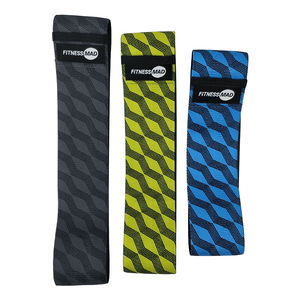
Exercises such as squats, lunges, wall sits, are all great for strengthening these muscles. To increase the difficulty and make these more effective try using resistance bands, like these from Mad Fitness.
Squat Bands are a great way to add a little extra difficulty to a regular squat, ideal for building glute and leg muscles. The Mad Fitness Squat Bands are available in 3 sizes so you can find your perfect fit.
The Mini Power Loop resistance bands can be used for a variety of exercises. Available in a set of 5 different strengths allowing you to increase the difficulty of your workouts as you build strength.
Knee Supports:
For keeping the knee joint supported, compression sleeves and supports can be a valuable tool.
Knee Compression Support - Bearhug
Made from a blend of bamboo fibres, nylon, and spandex, the Bearhug Knee Support provides support and protecting for the knee joint and surrounding tissue.